Why Manufacturing Automation Is a Long-Term Investment for Canadian Plants
For many Canadian manufacturers, automation is no longer a question of prestige or trend. It is a practical response to stubborn operating realities: labour shortages that do not ease, rising energy costs, tighter customer timelines, stricter quality requirements, and a competitive market where waste shows up quickly on the balance sheet. The plants that treat automation as a one-time equipment purchase often end up disappointed. The plants that treat it as a long-term investment, tied to process discipline and business strategy, usually get much better results.
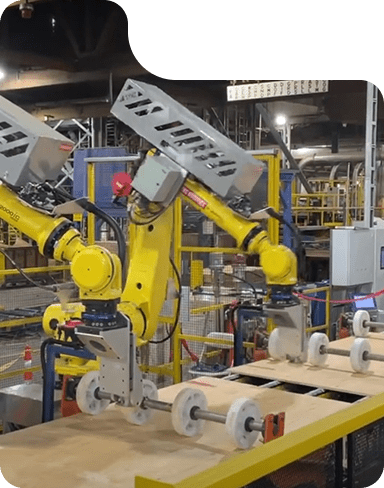
That distinction matters. A robot arm, vision system, conveyor upgrade, or integrated controls package can certainly improve a single operation. But the larger value of manufacturing automation comes from what it does over time. It reduces variability. It protects throughput. It captures data that managers can use. It makes staffing less fragile. It creates a plant that can scale production with fewer disruptions. In a country like Canada, where manufacturers often deal with higher labour costs, long supply chains, weather-related logistics issues, and regional skill shortages, that kind of resilience is worth more than a short payback on one machine.
I have seen projects that looked expensive on paper become obvious wins after two or three years, not because the original estimate was wrong, but because the estimate had missed the secondary effects. Fewer changeover mistakes. Less scrap during night shifts. Lower overtime. Better traceability when a customer questioned a batch. Shorter training time for new operators. These benefits rarely show up fully in a basic capital request, yet they are often what makes industrial automation solutions pay off.
The Canadian manufacturing environment rewards stability
Canadian plants operate under conditions that make consistency unusually valuable. Labour availability is uneven from region to region. A food processor in southern Ontario, a fabricated metals shop in Alberta, and a forestry products facility in British Columbia may all face the same broad issue, but the details differ. Some struggle to recruit licensed technicians. Others can hire, but turnover remains high. In some sectors, a plant can run profitably only if it keeps experienced operators on the line, and that has become harder.
Manufacturing automation helps because it reduces dependence on manual intervention in the areas where errors and fatigue do the most damage. This does not mean replacing every operator. In many successful projects, the real gain comes from assigning people to tasks where judgment matters and letting automation systems handle repetitive motion, precision dosing, inspection, or synchronized machine control.
Energy and raw materials also push Canadian plants toward a long-range view. If every start-stop cycle causes excess scrap, or every poorly tuned process consumes more compressed air, electricity, or packaging material than necessary, the plant feels it. A factory automation project that tightens process control can lower unit costs quietly, month after month. These are not glamorous savings, but they are durable.
There is also the issue of geography. Canada’s supply chains can be long, and service support may not be around the corner. That reality makes robust system design more important than chasing the lowest upfront price. When a plant invests in industrial automation Canada projects with maintainability in mind, including sensible spare parts, remote diagnostics, clean panel layouts, and clear documentation, downtime risk drops. Over several years, that matters more than the initial discount on a cheaper install.
Short-term thinking is what makes automation seem risky
Some hesitation around automation is understandable. A serious project can require six figures, and larger lines can move well beyond that. Production cannot always stop for long. Legacy equipment may not communicate cleanly with new controls. Supervisors may worry about upsetting a process that already works, at least most days.
The trouble is that many plants compare a full automation investment against an unrealistically calm version of manual operation. On paper, manual processes look flexible and inexpensive. In real life, they often rely on overtime, tribal knowledge, and a few highly experienced employees who know how to keep things moving. That hidden dependence becomes visible only when someone calls in sick, retires, or leaves for a competitor.
I once visited a plant where a packaging line ran acceptably when the senior operator was on shift. He knew exactly how to correct minor misfeeds, when to slow the line, and how to compensate for variations in incoming product. Management had delayed upgrading the line because it technically met output goals. When that operator retired, performance dropped within weeks. Scrap rose, customer complaints increased, and maintenance spent far more time responding to line issues. The automation project that had seemed optional became urgent, and more expensive, because the plant was now solving it under pressure.
Long-term investment thinking changes the question. Instead of asking, “Can we justify this machine this quarter?” the better question is, “What will this process cost us to run, staff, maintain, and troubleshoot over the next five to ten years?” In many cases, manufacturing automation looks far stronger under that lens.
Return on investment is broader than labour savings
Too many automation business cases rest almost entirely on headcount reduction. That can be part of the picture, but it is usually incomplete and sometimes counterproductive. In Canadian plants especially, automation often delivers more value by allowing existing staff to support higher throughput, safer work, and more reliable quality rather than by cutting positions outright.
A more realistic view of ROI includes several factors:
- reduced scrap and rework from tighter process control
- higher uptime through better machine coordination and fault detection
- lower overtime caused by staffing gaps or unstable output
- safer work in stations with repetitive strain, heat, dust, or pinch hazards
- improved data for planning, maintenance, and customer traceability
That mix tends to produce steadier gains than labour savings alone. Consider a plant running two shifts with frequent micro-stoppages. Each stoppage lasts only a minute or two, but over a week they add up to hours of lost capacity. A modern controls upgrade with sensors, proper alarming, and line synchronization might not eliminate a single position. It may still pay back faster than expected because the plant recovers enough production time to avoid weekend overtime and late shipments.
Quality is another major lever. In industries such as food processing, pharmaceuticals, automotive components, and aerospace machining, a single recurring defect can be far more expensive than the direct labour attached to the station where it occurs. Automated inspection, guided assembly, barcode verification, and process interlocks can stop errors before they move downstream. That is where automation systems become strategic. They protect margin and reputation at the same time.
Automation builds capacity without always expanding footprint
Canadian manufacturers often face space constraints before they face order constraints. Expanding a building is expensive, slow, and not always possible. Smart factory automation can create effective capacity inside the existing footprint.
This happens in several ways. Automated material handling reduces staging chaos and clears aisles. Better line balancing removes bottlenecks that force upstream inventory buildup. Faster changeovers increase usable production time. Compact robotic cells sometimes replace larger manual work areas because they need less room for repeated motion and temporary storage. Even a controls retrofit on an older line can unlock more output if it reduces downtime between product runs.
The key point is that capacity is not only about machine speed. It is about how much good product the plant can produce, on schedule, with the staff and floor space available. Industrial automation solutions that improve flow often deliver stronger long-term returns than projects sold purely on cycle time.
I have seen plants add what amounted to a third of a shift in recoverable output simply by automating line transitions and reducing operator-dependent adjustments. No building expansion, no major staffing increase, just fewer losses between “machine capable” and “product shipped.”
The labour issue is structural, not temporary
Many plant leaders still talk about labour shortages as if they are waiting for the market to normalize. In some regions and sectors, that hope has not held up. Demographics, retirements, competition from warehousing and logistics, and changing expectations about shift work have all altered the labour picture. For some manufacturers, especially those outside major urban centres, finding and keeping enough skilled people has become a structural problem.
That is one reason industrial automation Canada investment keeps moving forward even when economic conditions soften. Plants know that if orders rebound quickly, labour may again become the constraint. Automation gives them a way to grow without assuming a perfect hiring environment.
This does not mean people become less important. In fact, the opposite is often true. Plants with well-designed automation usually need technicians, electricians, process specialists, and operators who can interpret data and respond intelligently to faults. The difference is that the work tends to shift away from repetitive manual handling and toward supervision, setup, optimization, and maintenance.
That transition requires planning. If management installs new automation systems without training, documentation, or involvement from operations, the project can create resentment and confusion. But when the workforce is brought into the process early, the result is often positive. Experienced operators usually know exactly where variability comes from. Their input can shape a better cell layout, better HMI screens, and more practical alarm logic. In the best projects, automation captures hard-won shop floor knowledge instead of ignoring it.
Reliability starts with process discipline, not gadgets
There is a persistent misconception that buying advanced equipment automatically produces advanced performance. It does not. Poor part presentation, inconsistent incoming materials, weak maintenance practices, and unclear ownership can undermine even the best-designed automated line.
The plants that benefit most from manufacturing automation usually do some uncomfortable groundwork first. They map the current process honestly. They identify failure points. They standardize where variation has been tolerated for years. They ask whether upstream and downstream operations are ready to support a faster or more tightly controlled process. Sometimes the right answer is not a full automation project immediately. It may be a phased approach: basic controls upgrade first, fixture improvements next, data capture after that, then robotics when the process is stable enough.
A sensible evaluation usually covers these questions:
- Is the process itself repeatable enough to automate successfully?
- Where does downtime really come from, operator action, equipment faults, or material inconsistency?
- Will the project improve a bottleneck, or simply move the bottleneck elsewhere?
- Does the plant have maintenance and controls support for the new system?
- Can the integrator or supplier support the equipment locally and over time?
Those questions save money because they push decision-makers beyond brochure claims. The strongest industrial automation solutions are grounded in process reality. They fit the plant’s maintenance capabilities. They allow room for future expansion. They do not rely on one programmer who disappears after commissioning.
Data matters more after year two than on day one
Early in an automation project, management tends to focus on installation, startup, and immediate output. That is natural. Yet some of the biggest long-term gains arrive later, once the system begins generating consistent operating data.
A manual process may produce rough shift reports and anecdotal explanations. An automated process can provide timestamped faults, cycle counts, reject reasons, recipe history, and performance trends. Over time, that information changes the quality of decision-making. Instead of arguing about whether a line is “usually down because of maintenance” or “usually down because of material issues,” the team can check the records. Preventive maintenance becomes easier to target. Changeover times can be compared by product. Frequent faults can be traced to root causes instead of accepted as normal.
This is where automation systems connect to a broader operational strategy. Plants do not need a huge digital transformation program to benefit. Even modest improvements in visibility can help supervisors staff lines better, maintenance teams stock the right spares, and production managers schedule with more confidence.
One manufacturer I worked with added simple downtime categorization and machine state tracking during a controls modernization. For the first few months, the output gain looked modest. But after six months, the plant had enough clean data to pinpoint a recurring issue with one upstream feeder that had been quietly disrupting three downstream assets. Fixing that issue produced more value than any single feature in the original project scope. Without the automation upgrade, they likely would have kept treating it as random nuisance downtime.
Safety improvements are financial improvements too
Safety is often discussed as if it sits outside the ROI discussion, which is a mistake. In real plants, unsafe manual handling, awkward reaches, repetitive motions, and exposure to heat or debris create direct and indirect costs. Lost-time incidents are expensive. Modified duties affect staffing flexibility. High-risk jobs also tend to have higher turnover, which then raises training costs and quality risk.
Factory automation can reduce these pressures by moving operators away from hazardous interactions and using guarding, interlocks, light curtains, and automated transfer systems to control exposure. But the strongest safety gains come when automation is integrated thoughtfully into workflow, not added as an afterthought. A robot that creates a maintenance access headache or forces awkward replenishment is not a mature solution.
Canadian plants, especially in regulated sectors, already understand the compliance side. The deeper value is operational. Safer stations are easier to staff, easier to standardize, and less likely to break down under production pressure. Over a five-year horizon, that can matter as much as a direct productivity increase.
The best projects are phased, not rushed
Not every plant should attempt a major transformation all at once. A staged approach is often smarter, especially in facilities with older equipment, limited in-house controls expertise, or narrow windows for shutdowns. Long-term thinking does not mean giant projects. It means sequencing investments so each one supports the next.
A plant might start by replacing obsolete PLCs and drives on a critical line. https://edwinewrs411.quillnesty.com/posts/designing-efficient-end-of-arm-tooling-for-automated-manufacturing That creates a maintainable controls backbone. Next, it could add sensors and line monitoring for visibility. After stabilizing the process, it might automate a repetitive handling step or integrate machine vision at a quality checkpoint. By the time a robotic cell or fully integrated packaging line arrives, the organization is better prepared to support it.
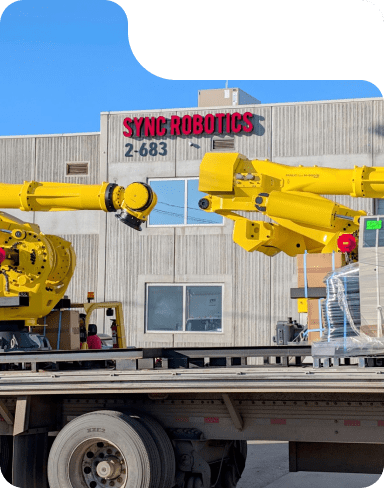
This approach also helps financially. Instead of asking the business to absorb one large capital event, management can tie each phase to measurable improvements. It builds trust. Teams see the results. Maintenance learns the new architecture. Operators get comfortable with the controls. When larger automation investments are proposed later, they rest on real plant experience rather than abstract promises.
Vendor selection can make or break long-term value
The right automation partner is not always the one with the flashiest demo or the lowest bid. For Canadian plants, serviceability and long-term support often matter more. Can the supplier provide parts within a realistic timeframe? Do they understand Canadian codes and industry requirements? Is there local or regional field support? Will they deliver clean documentation and training, or only a working line on handover day?
Plants should also look closely at how open the system will be. Proprietary black boxes can create headaches years later when modifications are needed. Well-structured, documented automation systems give owners more options. That flexibility has value, especially if production changes, volumes rise, or a customer requires additional traceability.
A strong integrator will spend time understanding the process before prescribing hardware. They will ask awkward questions about sanitation, maintenance access, operator skill levels, spare parts strategy, and future expansion. That kind of diligence usually signals a partner who is thinking beyond commissioning.
Why patient capital usually wins
When a plant invests in automation with a short-term mentality, disappointment often follows. The project is judged too early, training is rushed, debugging support ends too soon, or management expects immediate savings while the team is still learning the system. The opposite approach works better. Treat the investment as part of the plant’s long operating model.
That means budgeting for training, spare parts, software backups, preventive maintenance, and periodic optimization. It means expecting a learning curve. It also means recognizing that the full return often comes from compound effects: steadier output, lower variation, stronger planning, easier staffing, and fewer operational surprises.
Canadian manufacturing has never had much room for inefficiency. Margins are often too tight, distances too long, and labour too difficult to count on. In that environment, manufacturing automation is not just a productivity tool. It is a way to build a plant that performs reliably under pressure, adapts as conditions change, and holds its gains over time.
That is why the best leaders do not ask whether automation is expensive. They ask what it costs to keep running without it.
Sync Robotics Inc. — Business Info (NAP)
Name: Sync Robotics Inc.Address: 2-683 Dease Rd, Kelowna, BC V1X 4A4
Phone: +1-250-753-7161
Website: https://www.syncrobotics.ca/
Email: [email protected]
Sales Email: [email protected]
Hours:
Monday: 8:00 AM – 4:30 PM
Tuesday: 8:00 AM – 4:30 PM
Wednesday: 8:00 AM – 4:30 PM
Thursday: 8:00 AM – 4:30 PM
Friday: 8:00 AM – 4:30 PM
Saturday: Closed
Sunday: Closed
Service Area: Kelowna, British Columbia and across Canada
Open-location code (Plus Code): VHWR+PQ Kelowna, British Columbia
Map/listing URL: https://maps.app.goo.gl/xwtV2wEu8ZuKH3se8
Embed iframe:
Socials (canonical https URLs):
LinkedIn: https://www.linkedin.com/company/syncrobotics/
Instagram: https://www.instagram.com/syncrobotics/
Facebook: https://www.facebook.com/syncrobotics/
https://www.syncrobotics.ca/
Sync Robotics Inc. is an industrial robot and controls integration company based in Kelowna, British Columbia.
The company designs and deploys automation solutions for manufacturing operations across Canada.
Services include industrial robotics integration, controls integration, automation system design, deployment support, and related manufacturing automation solutions.
Sync Robotics Inc. is located at 2-683 Dease Rd, Kelowna, BC V1X 4A4.
To contact Sync Robotics Inc., call +1-250-753-7161 or email [email protected].
For sales inquiries, email [email protected].
Hours listed are Monday to Friday 8:00 AM–4:30 PM, with Saturday and Sunday closed.
For directions and listing details, use the map listing: https://maps.app.goo.gl/xwtV2wEu8ZuKH3se8
Popular Questions About Sync Robotics Inc.
What does Sync Robotics Inc. do?Sync Robotics Inc. designs and deploys industrial robot and controls integration solutions for manufacturing operations.
Where is Sync Robotics Inc. located?
Sync Robotics Inc. is located at 2-683 Dease Rd, Kelowna, BC V1X 4A4.
Does Sync Robotics Inc. serve clients outside Kelowna?
Yes—Sync Robotics Inc. is based in Kelowna, British Columbia and serves clients across Canada.
What are Sync Robotics Inc.’s hours?
Monday–Friday: 8:00 AM–4:30 PM; Saturday and Sunday closed.
How can I contact Sync Robotics Inc.?
Phone: +1-250-753-7161
General Email: [email protected]
Sales Email: [email protected]
Website: https://www.syncrobotics.ca/
Map: https://maps.app.goo.gl/xwtV2wEu8ZuKH3se8
LinkedIn: https://www.linkedin.com/company/syncrobotics/
Instagram: https://www.instagram.com/syncrobotics/
Facebook: https://www.facebook.com/syncrobotics/
Landmarks Near Kelowna, BC
1) Kelowna International Airport2) UBC Okanagan
3) Rutland
4) Orchard Park Shopping Centre
5) Mission Creek Regional Park
6) Downtown Kelowna
7) Waterfront Park